
Using Data to Make Smarter Personal and Business Choices
Image credit: Unsplash
The constant flow of information in our daily lives presents a powerful opportunity to improve our choices. From picking a route to work to launching a new product line, the quality of our decisions is directly tied to the quality of the data we use. Embracing a data-focused mindset isn't just for statisticians or analysts; it's a fundamental skill for navigating the modern world effectively.
Everyday Data Decisions
You are already making data-driven choices every day, even if you don't label them as such. Checking the weather forecast before dressing, reading customer reviews before a purchase, or scanning traffic maps before leaving the house are all simple examples of using available information to achieve a better outcome. This process is the core of data-driven decision-making, which involves basing your actions on objective analysis rather than solely on intuition or anecdotal evidence.
The principle scales from personal life to professional settings. A manager might analyze sales figures to identify the most popular products, while a university administrator could review enrollment trends to decide which courses to offer next semester. In every case, the goal is the same: to move from guessing to knowing.
From Raw Data to Insight
Raw data on its own is often just noise. A long spreadsheet of numbers or a collection of customer comments doesn't automatically provide answers, but can offer smart strategies for navigating challenges. The real power comes from transforming that raw material into clear, actionable insight. This journey involves a few key steps: collecting relevant information, cleaning it to ensure accuracy and consistency, analyzing it to spot patterns, and finally, presenting the findings in a way that is easy to understand.
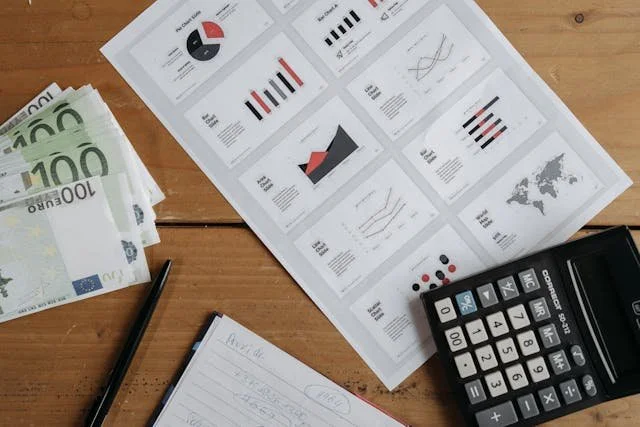
This process is critical for unlocking the power of data in any organization. Visualizations like charts and graphs can reveal trends that are invisible in a table of numbers. For instance, a simple line chart can instantly show whether sales are growing or declining over time, providing a much clearer picture than a list of monthly revenue figures.
AI Transforms Business Choices
Manually sifting through massive datasets is time-consuming and prone to human error. This is where artificial intelligence is making a significant impact. AI algorithms can process vast quantities of information in seconds, identifying complex patterns, correlations, and anomalies that a person might easily miss. This capability accelerates the path from data to insight and enhances the reliability of the conclusions.
In corporate finance, for example, the measurable AI value in FP&A is seen in more accurate forecasting and automated performance analysis. These tools can analyze historical financial data alongside market trends to generate more reliable budget predictions. This frees up finance professionals to focus on strategic planning and advising leadership rather than getting bogged down in manual data crunching.
Sharpening Your Analytical Edge
You don't need to be a data scientist to benefit from a more analytical approach. Developing a few core skills can dramatically improve your ability to use data effectively in any role. Start by cultivating a habit of asking critical questions. When presented with a claim, ask "What data supports this?" and "Is the data reliable?"
Consider learning the fundamentals of statistics to better understand concepts like correlation versus causation. Familiarity with basic data visualization tools, many of which are built into spreadsheet software, can also help you explore and communicate information more effectively. The objective isn't to become an expert overnight but to build a foundation of data literacy that strengthens your judgment.
The Future of Smart Planning
The integration of data into our decision-making processes is only set to deepen. The future points toward more predictive and proactive planning. Instead of just analyzing what happened in the past, advanced analytical tools will increasingly help us forecast what is likely to happen next. Imagine a supply chain system that doesn't just report a delay but predicts it weeks in advance based on weather patterns, port congestion, and shipping data, allowing a company to reroute its goods proactively. On a personal level, this could mean smart home devices that learn your habits to optimize energy use without you ever touching a dial.
As technology continues to evolve, our ability to harness data for smarter planning will become an even greater advantage. Those who are comfortable asking questions of data and interpreting the answers will be best positioned to succeed in their personal and professional lives.